How hospitality is reshaping the way we experience places
For many years, hospitality was associated with hotels, guest experience and service excellence. Today, its principles extend far beyond the hospitality sector, influencing the way workplaces, residential developments, mixed-use destinations, retail environments and entire neighbourhoods are conceived.
This shift reflects a much broader transformation. Places are no longer valued solely for their architecture, location or functionality. They are increasingly expected to create meaningful experiences, foster human connections and give people a reason not only to visit, but to return.
JLL’s Experience Matters 2025 report, based on insights from more than 12,000 respondents across 19 markets, highlights this evolution, showing that experience has become one of the key drivers of value in real estate, alongside the quality of space and services.
We spoke with Marie Le Gohebel, Deputy CEO Group, and Adrian Strittmatter, CEO Group, about how hospitality is changing the way destinations are developed, experienced and brought to life.
Hospitality is increasingly shaping the way we think about destinations. Where does lifestyle fit into this evolution?
Marie Le Gohebel
Hospitality is a broad sector, but at its heart, it has always been about the way places welcome and care for people. That naturally includes services, but also extends to every detail that shapes the overall experience.
Within hospitality, lifestyle has emerged as a more experience-led approach — one that places greater emphasis on design, atmosphere, local culture and social connection. Rather than offering a standardised experience, it creates a distinctive world that people can identify with and want to be part of.
We increasingly see these principles extending beyond traditional hospitality into mixed-use destinations that bring together working, living, meeting, shopping or socialising. What ultimately matters is how seamlessly these experiences come together.
We’re no longer talking simply about square metres or functions. A destination becomes the setting for an experience that creates preference, emotional connection and lasting memories.
Adrian Strittmatter
Regardless of their primary function, destinations are emphasising their role as hosts.
They’re reintroducing a higher level of care, service and human interaction that, in some asset classes, had gradually faded.
If all we want is to buy something, digital channels often offer a faster alternative. The reason we still choose to visit physical places is because they offer something more: interaction, atmosphere, discovery and the feeling of belonging to something.
Hospitality is what reconnects destinations with that purpose. It’s not simply about making places more comfortable; it’s about making them worth experiencing.
Why are destinations outside the hotel industry embracing hospitality principles?
Marie Le Gohebel
People’s expectations have changed dramatically.
The boundaries between professional, personal, cultural and social life have become increasingly blurred. Experiences we value in hotels, restaurants or leisure destinations have gradually become benchmarks for every type of place.
People also compare experiences more than ever before. A destination that feels welcoming, intuitive and enjoyable is recommended. Conversely, even the most technically impressive project can fail to resonate if it doesn’t create an emotional connection.
This is particularly evident in the workplace. Employees no longer expect simply a desk and high-performance facilities. They increasingly value environments that encourage collaboration, wellbeing, learning and social interaction.
Gensler’s 2025 Global Workplace Survey, conducted with nearly 17,000 respondents worldwide, reflects this shift, revealing that only 14% of employees still aspire to a traditional office experience.
Adrian Strittmatter
Lifestyle is ultimately about how a place influences the way people live. The most memorable experiences are rarely the most spectacular.
A beautifully designed hotel can still feel impersonal. Meanwhile, genuine hospitality, thoughtful service or an unexpected moment can leave a lasting impression. The same principle now applies across every type of destination.
The question is no longer simply what do we offer? It’s how do we want people to feel?
Are we witnessing a new service trend, or a much deeper transformation in the way people relate to places?
Marie Le Gohebel
I believe the transformation runs much deeper.
For decades, destinations were primarily designed around their core function: an office for work, a shop for retail, a residential building for living.
Today, we think about places through the combination of experiences they bring together. A destination becomes attractive when it enables people to work, meet, relax, dine and discover within a coherent environment.
Hospitality acts as a catalyst for this hybridisation. It encourages every stakeholder to think beyond a single use and imagine destinations in a much broader way.
Adrian Strittmatter
In many respects, it’s also a return to fundamentals.
Physical places have always been spaces for interaction and community. Offices, for example, have never been solely about productivity; they’ve always been places where people learn from one another, build trust and develop a sense of belonging.
Digital technology hasn’t removed that need. If anything, it has reminded us of the unique value of physical experiences.
We’re returning to very human expectations — welcome, relationships and belonging — while responding to new behaviours, higher expectations and more sophisticated services.
Why has brand strategy become so important in this evolution?
Marie Le Gohebel
Because today a brand is about much more than visual identity. It provides meaning, creates a shared narrative and aligns everyone involved in a project.
Within a mixed-use destination, owners, operators, retailers, hospitality teams and cultural partners all have different objectives. Brand strategy provides a common framework, ensuring that services, experiences, communications and activations all contribute to the same long-term story.
A strong brand also has the ability to evolve without losing consistency. It accompanies the project through development, leasing, operations and everyday life.
Adrian Strittmatter
A brand should define not only what a destination says, but how it behaves.
How does it welcome people?
How does it create connections?
What level of service does it deliver?
How are its values expressed through the experience itself?
Hospitality cannot simply be added afterwards as another layer of services. It has to be embedded from the very beginning, through strategy, and expressed consistently across every touchpoint.
That is what transforms a brand promise into a credible experience.
How has this evolution changed the way you approach destination branding?
Marie Le Gohebel
It’s led us to create brands with far greater depth and longevity.
In commercial real estate, brands were traditionally designed to support leasing campaigns. Once buildings were occupied, their role often came to an end. Today, brands are expected to evolve long after completion. They support services, programming, partnerships, content and the communities that gradually develop around a place.
Capital 8 perfectly illustrates this approach. We have accompanied the asset from its repositioning through to operation. The brand first established a new ambition and market perception before becoming a platform for experiences, cultural collaborations, sporting partnerships and ongoing engagement with its different communities.
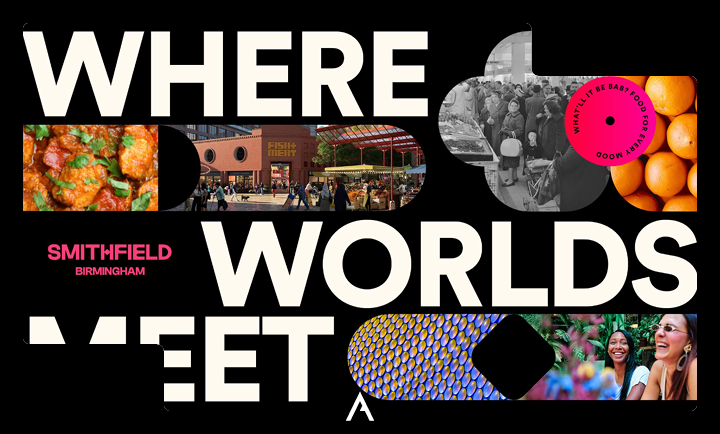
The same thinking underpins projects such as Campus Biotech, where the brand helps unite an international scientific community, and destinations such as Mont d’Est and Birmingham, where brand plays a key role in reshaping perceptions while putting residents and end users at the heart of the experience.
Adrian Strittmatter
Brand has become an increasingly valuable asset in its own right.
When built on a strong strategic foundation, it evolves alongside the destination and gains recognition over time.
Branded residences are probably the clearest illustration of this. Buyers are no longer purchasing only a property or its architecture; they’re investing in a service culture, a lifestyle, a community and the world of a brand.
According to Savills, the global branded residences market was expected to grow by 19% in 2025, reaching around 910 developments worldwide.
Office real estate hasn’t reached that stage yet, but it’s moving in the same direction. As buildings become increasingly comparable in terms of quality and specification, hospitality and brand experience will become increasingly powerful drivers of differentiation — and, ultimately, value.
How do you see hospitality shaping the next generation of destinations?
Marie Le Gohebel
I believe the next chapter will revolve around community.
Over the past few years, we’ve focused heavily on improving spaces and services. The next challenge will be bringing together people who share common values, interests and aspirations. We won’t go back to purely functional destinations. The benefits of hospitality are now too evident.
The challenge is to make it more authentic, more meaningful and more sustainable — not by multiplying services, but by understanding which experiences genuinely strengthen people’s relationship with a place.
Adrian Strittmatter
The need to belong will remain fundamental.
Digital technologies and artificial intelligence will undoubtedly make services more seamless and more personalised, but they will never replace human relationships.
The destinations that succeed tomorrow will be those capable of combining both dimensions: using technology to enhance physical experiences while continuing to create meaningful human connections.
Ultimately, hospitality brings us back to timeless principles: welcoming people, creating connections, giving purpose and helping individuals feel part of something bigger.
What has changed is not the ambition — it’s the way we bring it to life.